Europe’s drone war
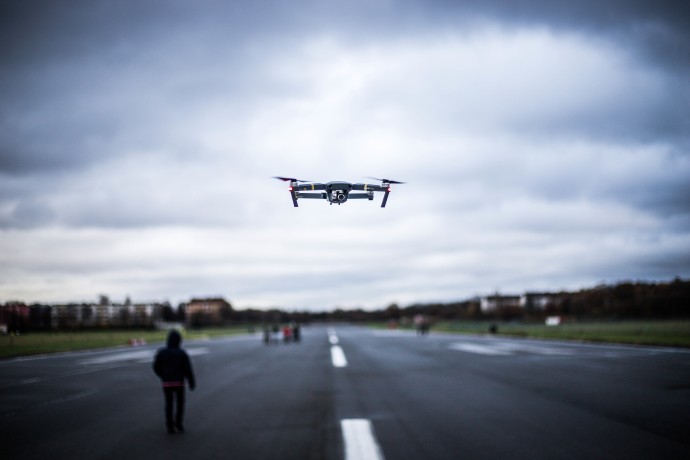
Illegal drones escalate Russia's scope and policy of intimidation, intended to divide or destabilize Europe in its collective resistance to Russian aggression and expansion. They force Europe either to react or to bow down to a creeping Taiwan scenario in which Russia can continue to interfere with impunity.
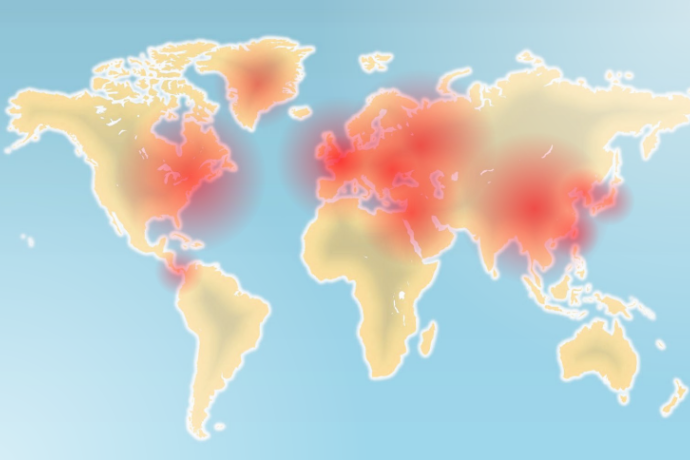
In just a few weeks, the skies over Romania, Poland, Norway, Denmark, Latvia, Germany, Finland, and France have been disrupted by unidentified drones. The suspected geographical origin of some of these objects and the pattern of the apparent targets—airports, a nuclear power plant, a hydroelectric dam, and military bases—suggest more than just illegal drones. There is no formal proof, but there is a strong suspicion of Russian interference. The invasion of Ukraine has marked the birth of the AI-powered drone era in warfare. It was only a matter of time before this reality spilled over into the hybrid war that Russia has been waging against Europe for many years. That moment seems to have arrived.
Thanks to its wartime advantage in drone technology and production, Russia can do with drones what it cannot do with conventional or nuclear weapons: strike Europe on its territory without actually attacking it. Illegal drones escalate Russia's scope and policy of intimidation, intended to divide or destabilize Europe in its collective resistance to Russian aggression and expansion. They force Europe either to react or to bow down to a creeping Taiwan scenario in which Russia can continue to interfere with impunity.
A hybrid drone war over Europe is a test. Will we swallow the provocation or dare to escalate ourselves? Who will take up the challenge? Which countries will stand aside? Will the entire EU or NATO participate as a whole, or will these institutions be reduced to coalitions of countries that are either forced or willing to act? In all of this, Russia can only win tactically. Caving in would further divide and weaken Europe, a signal that Russia can continue pushing the boundaries of aggression further. Responding would use weaponry we cannot give to Ukraine – air defence remains a pressing problem there. In any case, Europe requires a comprehensive approach to the detection and elimination of illegal drones. The cost of our conflict with Russia – political, social, psychological, economic, financial, logistical, and military – is about to increase again.
Europe’s new normal is a permanent latent drone threat throughout its airspace. In the short term, this will force all European countries to identify, test, and strengthen the resilience of potential targets and to develop systematic and effective countermeasures, including anti-drone drones. The cost of launching illegal drones is negligible, while the cost of a comprehensive protection against illegal drones is enormous. And comprehensive protection is essential: no airport or nuclear power plant can afford a single accident, to give just one example. This cost asymmetry makes drone attacks particularly attractive to a reckless state like Russia, as well as to criminals of all stripes.
In the longer term, Europe, as a single bloc, must develop a common high-tech drone shield that proactively guarantees permanent security for all. The steps for this have already been taken, both within NATO and the EU. It is positive that countries are spontaneously pooling resources and that the European Union wants to be involved in the coordination and financing of a common ‘drone wall’. It is even more positive that the Union is immediately involving Ukraine in this process. Aside from Ukraine’s obvious battlefield expertise, this signals a future of integrated European security, with Ukraine as the first line of European defence.
It remains to be seen how quickly European countries will be able to rollout and scale the required protections. The real question is what will happen if, in the meantime, an incident occurs with Russia as the demonstrable perpetrator. Will Europe then escalate in unison, and will Trump's America stand by us? Or will Russian drone roulette see Europe divided, the US stand on the sidelines and tear the pretence of common NATO-security apart? That test, too, is certainly worth a few drones to the Kremlin.