One Europe, Three Speeds?
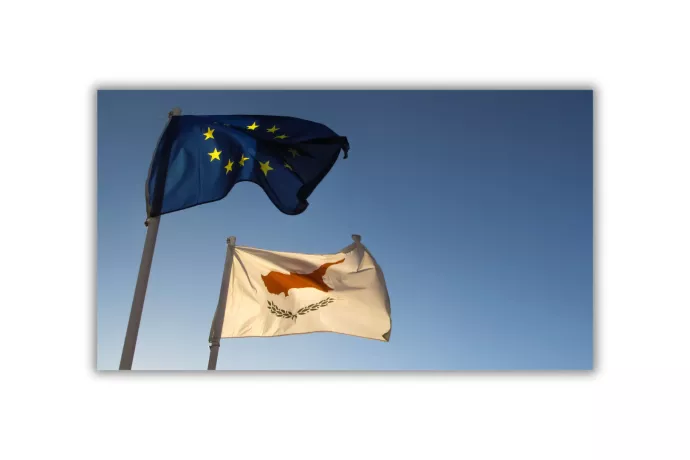
Last week’s European summit was, as previous summits before it, dominated by the geopolitical travails of the European Union. This time around, Europe’s leaders could confirm the widely expected post-Orbán step to unlock Ukraine’s financial support package, discuss the energy shocks radiating from the Street of Hormuz, ponder the role of the EU’s NATO-style mutual assistance clause, and brainstorm on the need to reconfigure the EU budget for a new world of disorder. So far, so unfinished business as usual.
Yet, Cyprus 2026 may well enter the history books for what happened during its informal pre-summit: the signing of the “One Europe, One Market Roadmap” by the three institutional presidents — Nikos Christodoulides for the Council Presidency, Ursula von der Leyen for the European Commission, and Roberta Metsola for the European Parliament — and by all 27 member state leaders. If this roadmap indeed maps out the road now taken, the European Union has just become multispeed and proto-federal. Yes, you read that correctly.
Don’t get me wrong: multispeed Europe is nothing new. That is what the Benelux Union, the Visegrád Group, the Weimar Triangle, the Hanseatic League, the Frugal Four, the Bucharest Nine, the Three Seas Initiative, the Mediterranean Nine and the E6 all have in common. They are groups of EU countries engaged in closer cooperation — in economic integration, fiscal policy, security, migration, defence, industrial policy and strategic autonomy — outside the formal framework of the European Union.
The same dynamic plays out through the North Sea Coalition, the Nordic-Baltic Eight, the European Intervention Initiative, the Joint Expeditionary Force, the Ramstein Group, the Coalition of the Willing, and the NATO Support Command for Ukraine. Each of these is an informal cooperation framework, primarily in security and defence, and several include non-EU countries such as the United Kingdom, Norway, Canada, Japan, and Australia.
Some of these initiatives are long-established; some have a regional focus; some exist primarily as diplomatic symbolism; others are recent and driven above all by crisis and conflict. Together, they reveal a dynamic Europe of multiple speeds, of clusters and networks. Within the European Union itself, further networks exist. The eurozone currently encompasses 20 of the 27 EU member states; the European Unitary Patent covers 17. The Schengen Area for free movement of persons includes a majority of EU countries and several non-EU countries. And there are the “opt-outs” that allow member states to stand aside rather than paralysing the EU as a whole — as Hungary under Orbán amply demonstrated.
But all of that really pales into insignificance beside the “One Europe, One Market Roadmap”. Not in substance per se. The Roadmap is an attempt to bundle long-running EU-reform plans into a single framework. There is much of critical importance but there are no surprises there: deregulation, a capital markets union and the digital euro, a trade-geopolitical strategy for European autonomy, a strengthened energy market for security and affordability, and a package for European technological sovereignty in areas including artificial intelligence and semiconductors.
The surprise lies in the delivery plan: binding, measurable, and tightly timed toward an overall deadline of end-2027.
For each proposal, quarterly deadlines are set. A permanent steering group comprising the Commission, the European Parliament, and the European Council is tasked with monitoring progress. And the icing on the cake: if member states oppose, “enhanced cooperation” is brought to the table — a formal procedure under which at least nine member states can press ahead under the EU umbrella while others look on. A new “coalition of the willing” would thus be institutionalised within the EU itself.
The roadmap is not only a political, but also an institutional and operational commitment: a tripartite entente between the Commission, the Parliament and to Council as a triumvirate delivery unit for the EU. The proof of the pudding will be in the eating. The endorsement of member states still needs to be tested politically. But if all this flies, we can see the future shape of a renewed European Union.
At the top: a mini-EU of member states in “enhanced cooperation”, pushing ahead with de facto European federalisation for geopolitical and geo-economic power. At the bottom: the waiting room of candidate member states and a group of strategic partner countries such as Ukraine, the United Kingdom, and Turkey — all part of the “European Political Community” established in 2022 following Russia's invasion of Ukraine, all connected to the European Union on security and defence matters. And in between: a middle group of EU member states that remain where they are, while the EU institutions themselves are expected to function far more closely and effectively as a unified body.
To make this three-speed Europe work, major decisions still lie ahead: on the geopolitical relationship with China, the United States, Russia and NATO, in particular. But if we move in this direction, we can at least begin to put those questions firmly on the table. The real issue is then whether a core group of countries can reach agreement on them — and whether the member states will allow them to move forward, even if they disagree. Only if that becomes a political reality, will a three speed Europe achieve its potential. Fingers crossed.