NATO 3.0
Will Ankara 2026 go down in history as the birth of NATO 3.0? That is the term circulating in diplomatic circles to describe a NATO in which Europe matters more and America less — the alliance's second transformation after the first, which followed the end of the Cold War.
Less America was the defining theme of the first NATO summit in the Turkish capital. President Donald Trump arrived, lashed out at supposedly unreliable European countries and leaders, threatened once again to withdraw American troops from Europe, and reiterated his claim to Greenland. In the recent past, such rhetoric would have triggered panic among the Europeans. This time, they collectively shrugged it off, focusing instead on the parallel, second NATO summit: the one devoted to advancing rearmament and building up defence industrial capacity.
The billions are now flowing freely — a combined $139 billion in additional spending since last year's NATO summit in The Hague. The defence industry forum in Ankara reportedly generated more than $50 billion in new orders. Much of that is going to the usual American suspects, but European industry is claiming its share of the spoils as well. Sweden's Saab is displacing Boeing in the replacement of the AWACS airborne early warning aircraft; Airbus will supply transport aircraft to eleven allies; Germany's TKMS will build submarines for Canada. More Europe, less America — but with a pie that is growing for everyone. Trump stands by, watches, and praises the brotherly love among NATO's member states. Go figure.
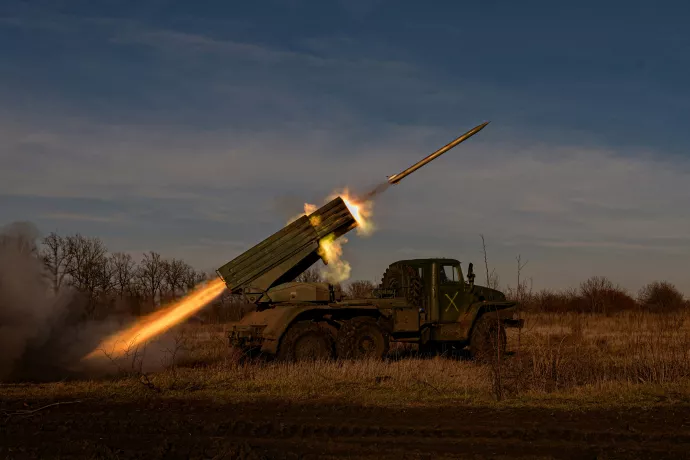
If Ankara marks the opening chapter of a post-Trump NATO, then Ukraine is its defining symbol. There is no European military self-confidence without Ukrainian success on the battlefield. Nor is a strong European pillar within NATO conceivable without Ukraine's military and industrial strength. Ukraine was not merely present in Turkey; it was important to the summit. The final declaration praises the country for its contribution to transatlantic security. That is not yet NATO membership, but it is a bridge to NATO, built on hard-won Ukrainian technological expertise that even America now needs.
Kyiv was also promised two years of military support — a total of €140 billion, without a single American dollar. It will moreover be allowed to manufacture Patriot air defence missiles under licence in Ukraine, opening the door to a potentially significant transfer of technology. In that sense, the Ankara summit appears to seal a change of course by Trump himself. Gone is the talk of a swift pro-Russian peace. In its place is begrudging respect for Ukraine's military prowess, together with the tacit recognition that this brutal war is set to continue for the foreseeable future. The summit communiqué describes Russia as a long-term threat to Euro-Atlantic security and stability, while reaffirming collective defence under the famous Article 5 as ironclad. They are only words, but they are there nonetheless — signed off, no less, by Donald Trump.
If this shift endures, we may be witnessing the emergence of a NATO in which the European allies assume ever greater responsibility for their own conventional defence, while America primarily retains a shared nuclear umbrella. That will go hand in hand with increasing European industrial and technological integration and clustering, as well as more pooled pan-European procurement – typically around 30% cheaper than purely national purchasing. As a future member of the European Union, Ukraine will become a critical player in this new landscape, at the very least de facto integrated into NATO's planning and operations.
The remaining question is whether Putin's Russia still has unpleasant surprises in store for the alliance in the near future. Should Moscow escalate or provoke once again, we will find out whether a stronger Europe also means a stronger NATO, despite less America.
Marc De Vos is co-CEO of the Itinera Institute, a strategy consultant, and teaches at Ghent University. His most recent book is ‘Superpower Europe. The European Union’s Silent Revolution.’ (Polity)
This is the full text version of a column originally published by Table.Media